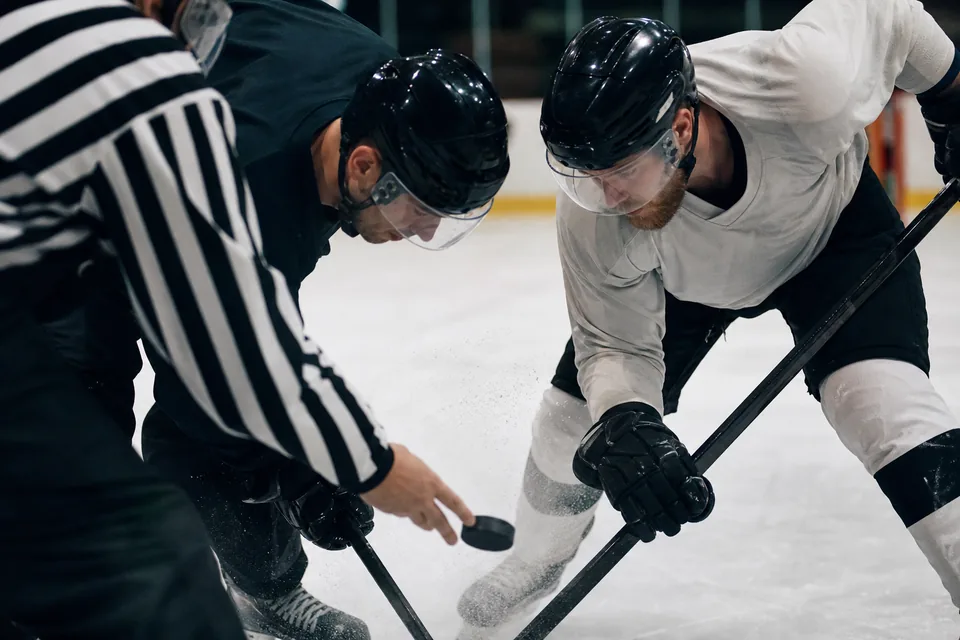
What moves an ice hockey price
Ice hockey sits between soccer and basketball. Goals are scarce, around five or six in a typical game, but the play is fast and the momentum swings hard. Three things move a hockey price more than anything else.
- Goals. With so few of them, each goal is a large move on the regulation result and the next goal market.
- Pressure. When one side is on top, its scoring rate rises and the other side falls back, so the next goal market leans its way.
- The clock. Three periods of twenty minutes, and every quiet minute shortens the draw and the no more goals price.
Sportsbooks also price power plays and the empty net; our engine records penalties as incidents and pauses micro-markets on them, but does not model a separate strength state. Shots on goal settle the one minute shot window and appear in the stats.
A goal model for hockey
Like soccer, hockey goals are rare and arrive fairly independently, so the engine prices them with a Poisson model. Each side has a scoring rate per minute, moved by a momentum reading of which side is pressing, and the model works from the current score and the time left.
Hockey scores more often than soccer, so the goal windows are shorter: three minutes instead of five. A one goal lead in the third period is fragile, and the price reflects how much time the trailing side still has.
From those rates the engine prices the regulation result, the next goal and the short goal windows from the same model. Prices are recomputed every second, so a quiet spell shows a steady drift toward the draw and no further goal.
The result market covers regulation time only, three periods of twenty minutes, so a draw is one of its three outcomes.
Ice hockey micro-markets
Hockey micro-markets follow the rhythm of shifts and penalties. Every hockey game in the engine offers these:
- Goal in a 3 minute window of game clock.
- Shot on goal in a 1 minute window.
- Next goal: home side, away side or no further goal.
- Regulation result: home, draw or away.
The shot window is the most intense: it locks at the start of its minute and settles yes at the first shot on goal, or no when the minute ends empty. The goal window is longer and calmer, and late in a close game it moves fast as the clock runs down.
Licensed operators get the same windows from our hockey micro betting module, generated and suspended automatically from the incident feed.
| Event | Effect on prices | Market status |
|---|---|---|
| Goal | Regulation result and next goal move, goal window settles | Micro-markets suspended for about eight seconds, then reopened |
| Penalty called | Recorded as an incident and in the stats | Micro-markets suspended for about eight seconds |
| Shot on goal | The open shot window settles yes | Open |
| Spell of pressure | Next goal leans toward the attacking side | Open |
| Quiet minute | Draw and no more goals shorten, goal windows drift longer | Open |
Pauses after goals and penalties
In hockey the puck can cross the line and be in the net before most viewers have registered the shot. Markets cannot stay open through that moment.
The engine suspends micro-markets for about eight seconds after every goal, applies the new score and reopens at the new price. A penalty call triggers the same short pause, because it is a dangerous moment in the game.
Settlement follows the incident timeline. A goal window settles yes at the first goal inside it, a shot window at the first shot on goal, and each settles no when its window ends empty.
A new window opens every minute of game clock, so there is always a fresh goal and shot question while the puck is in play.
In the game, a call made before any pause keeps its original multiplier, even if the tile comes back at a very different price.
Call hockey games for points
Hockey is a fun sport to call in RealTimeBets Play, because a one minute shot window turns a quiet stretch into a minute of tension. Back a shot on goal, call the next goal window or pick the next team to score, and win points at the multiplier shown when you called.
Hockey nights in Play are for adults 18 and older. Nothing here involves money: points have no cash value, cannot be bought, transferred or exchanged, and win no prizes.
The list on this page shows hockey games in the engine now. At present these are replays of fictional clubs labelled "Replay". When a licensed feed game is on, it shows a "Live" label instead. NHL is the phrase fans search for; we do not claim official league data or a league partnership.
The last minutes of a close third period are made for a league chat. See the prediction game page for leagues and Premium.
Hockey odds for licensed operators
Ice hockey runs almost every night of its season, which makes it a steady in-play sport for sportsbooks. The ice hockey odds API streams regulation result and next goal prices over REST and server-sent events streaming push, with an event data feed for score, clock, penalties and lineups. Settlement webhooks signed with HMAC SHA-256 come with every plan, so payouts follow the result without polling.
The Growth plan adds what hockey traders need most: micro-markets through the API for goal and shot windows, and the risk engine with liability per market and a stake cap per customer.
Every hockey price comes from the same Poisson model described above, with a margin of about 6 percent. Your sandbox key works right after signup with a 60 second delay on one sport. For production, store your licence number, regulator and country, then choose a plan.